

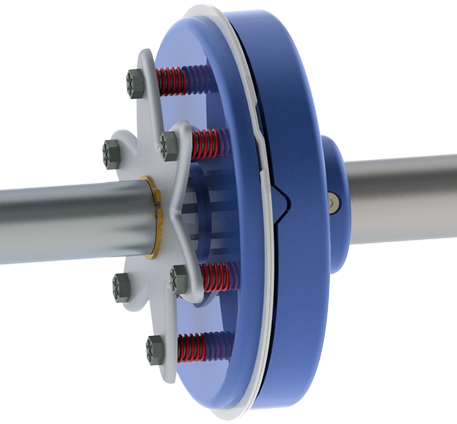
Layout of a Conventional Slip / Safety Clutch
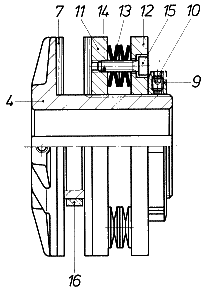
- Output Connection (4) - connected or attached to the output shaft that you want to drive.
- Friction Pad / Disc (7) & Pressure Disc (11) - These work in conjunction as friction elements, which provides the contact surface between these components. This ensures movement on the right is translated to the left.
- Adjusting Nut (9) & Threaded Pin (10) - helps attach the clutch to the drive unit.
- Adjusting Ring (12), Spring Element (13) & Cylinder Head Bolt (15) - The amount of force that can be transmitted through the clutch is controlled by 12, 13, and 15. The spring element in this case would be disc springs provides the force that lets you adjust how much torque can be transmitted into the clutch. This is done by adjusting the cylinder head bolts which will tighten down or loosen the adjustment ring to preload those springs.
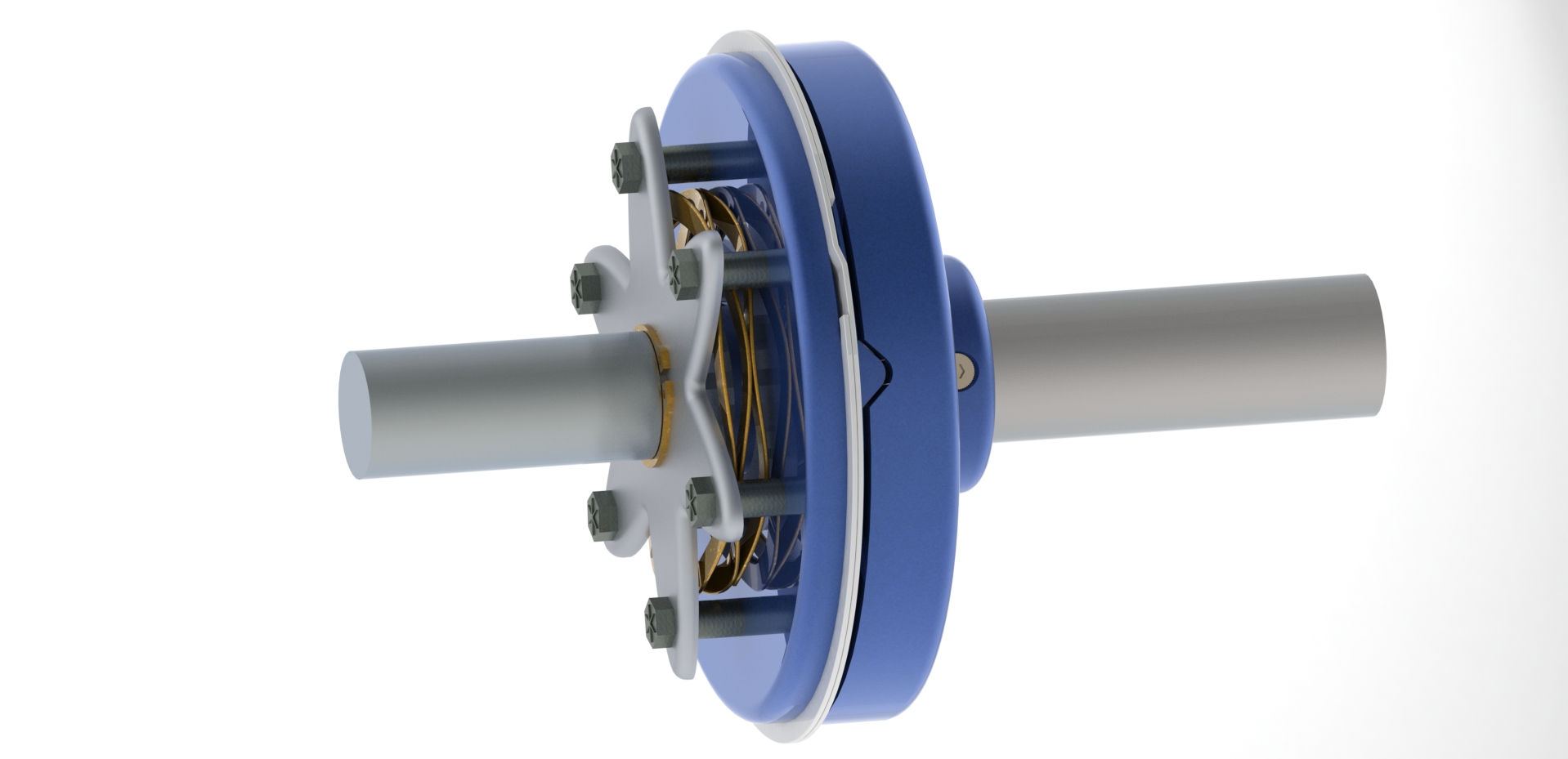
Slip/Safety Clutch With Our Parts
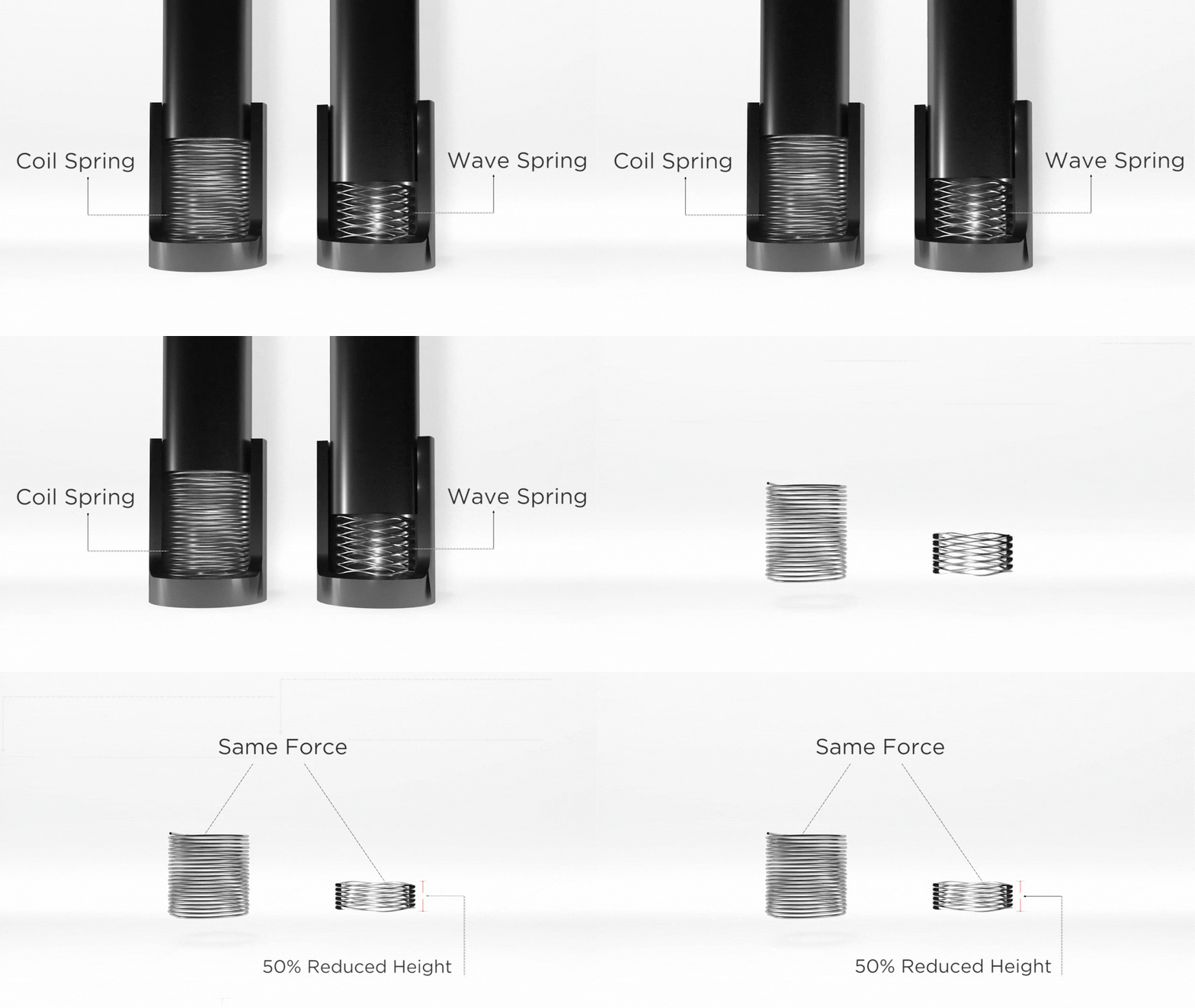
- Wave Spring - Rotor Clip has the capability to replace and simplify the assembly with a single spring element (wave spring). This results in making an assembly easier which will permit optimization sizing because you have a stronger spring element to potentially tailor the size down.
- External Spiral Ring - Serves as detection function, for when the clutch disengages to slow down in order to reengage. Includes a shoulder and a detector in order to locate right to left of the spiral ring. Overall our part will be used in conjunction with a censor that will detect the location of the ring and be able to determine the functional state of the clutch.
- External Tapered Section Ring - Fixing the preload plate to the output shaft.
Comparison Load Deflection Curves
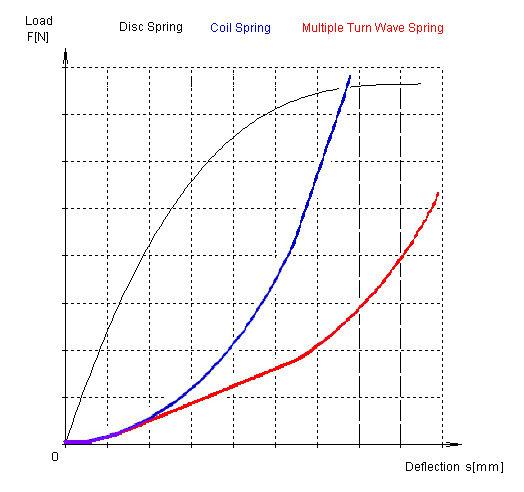
The original/traditional design of slip / safety clutches considers a multiplicity of coil springs or stacked disc springs which are shared on the periphery of the friction ring.
Only the multi-turn wave spring does have a linear area between 30% and 70% deflection. This advantage allows a specific load adjustment and a load without big meanderings during deflection. That’s very important for an accurate adjustment of the slip / safety clutch.
Benefits of using a wave spring in a slip/safety clutch
No tooling costs for special dimensions and exotic materials for all kind of wave springs which are used in clutch applications!
One Highly Engineered Spring
Only one spring will be used for the assembly; there is no risk to forget one spring during the assembly process
Minimize Traditional Components
The number of screws to fix and compress the multiplicity of coil or disc springs can be minimized.
Axial Space Savings
Wave springs will save axial space; space saving = compact clutch design!
Radial Space Savings
Using wave springs will save radial space compared to disc springs.
No Torsional Movements
No torsional movements compared to a coil spring during compression to work height; a wave spring always provides its load in axial direction.
Accurate Axial Force
Low spring rate with very flat load deflection curve provides a very accurate axial force to adjust the point of overcoming the spring force.
Assembly Line Advantages
Cling in bore (single turn wave spring designs only) and cling on shaft offers advantages in the assembly line – the wave spring does not need to fixed separately while the next component will be assembled.
Materials
Stainless steel and exotic materials could be easily used to provide correct corrosion and heat resistance (e.g. AISI 316 stainless steel, 17-7PH Cond.CH900 stainless steel, Inconel X-750 etc.)
Our Product Line
Our goal here at Rotor Clip is to continuously produce and deliver high quality, precision parts with tight tolerances that our customers can count on. In order to meet this goal, Rotor Clip has taken every critical production step and support process in-house. This total vertical integration allows for a very high level of quality control, process optimization, and innovation when it comes to manufacturing retaining rings, wave springs, and hose clamps.
Customers